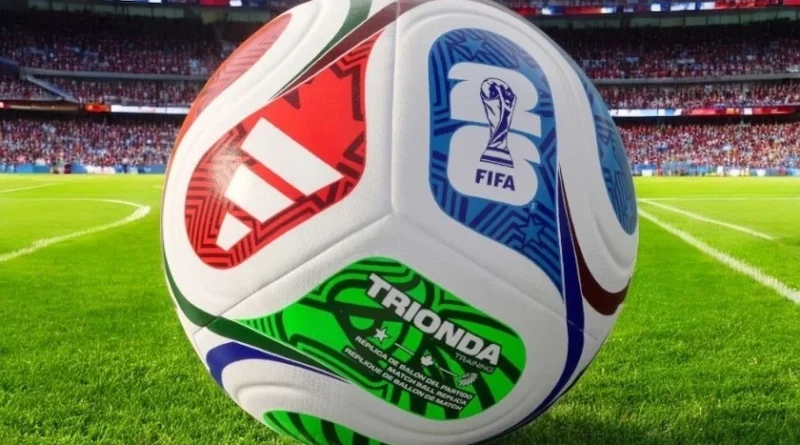
World Cup Ball
Everything About the FIFA World Cup Ball
The FIFA World Cup ball is the official football used during every FIFA World Cup tournament. It is specially designed to provide the highest level of performance, accuracy, durability, and consistency for the world’s best players.
History
- The first FIFA World Cup took place in 1930.
- Since 1970, Adidas has been the official supplier of FIFA World Cup match balls.
- Every tournament introduces a new ball with a unique design and improved technology.
Famous World Cup Balls
- Telstar (1970) – The first Adidas World Cup ball. Its black-and-white pattern became the classic football design.
- Tango (1978) – Introduced a design that inspired footballs for many years.
- Azteca (1986) – The first fully synthetic World Cup ball.
- Questra (1994) – Designed for greater speed and softer touch.
- Tricolore (1998) – The first World Cup ball with multiple colors.
- Fevernova (2002) – Featured a bold, colorful design inspired by Asia.
- Teamgeist (2006) – Used fewer panels, creating a smoother and more accurate ball.
- Jabulani (2010) – One of the most controversial balls because of its unpredictable flight.
- Brazuca (2014) – Praised for its excellent balance, grip, and control.
- Telstar 18 (2018) – Included NFC technology, allowing users to interact with the ball using a smartphone.
- Al Rihla (2022) – Introduced Connected Ball Technology with an internal sensor to help referees detect touches and improve offside decisions.
- Trionda (2026) – Features a new four-panel design, improved aerodynamics, and enhanced connected-ball technology.
Technology
Modern World Cup balls include:
- Thermally bonded panels instead of traditional stitching.
- Polyurethane outer surface for durability and water resistance.
- Textured surface for better grip and ball control.
- Excellent aerodynamics for stable and accurate flight.
- Connected Ball Technology, with an internal motion sensor that sends data to the Video Assistant Referee (VAR).
Materials
A modern World Cup ball is typically made of:
- Polyurethane (PU) outer cover
- Foam layers for cushioning
- Synthetic rubber bladder
- Internal electronic sensor (in recent editions)
Why Is the World Cup Ball Special?
The official World Cup ball is:
- FIFA Quality Pro certified.
- Tested for weight, size, roundness, water absorption, rebound, and durability.
- Used by the best players in the world.
- Designed to perform consistently in different weather conditions.
Interesting Facts
- The Jabulani (2010) was criticized by many players because it moved unpredictably in the air.
- The Brazuca (2014) became one of the most popular World Cup balls thanks to its reliable performance.
- The Al Rihla (2022) was the first World Cup ball to help referees using a built-in motion sensor.
- The Trionda (2026) uses only four panels, the fewest ever on a FIFA World Cup ball, to improve stability and flight.
Conclusion
The FIFA World Cup ball is much more than just a football. It represents innovation, technology, and the evolution of the game. Every new edition is designed to improve player performance while preserving fairness and excitement in the world’s biggest football tournament.